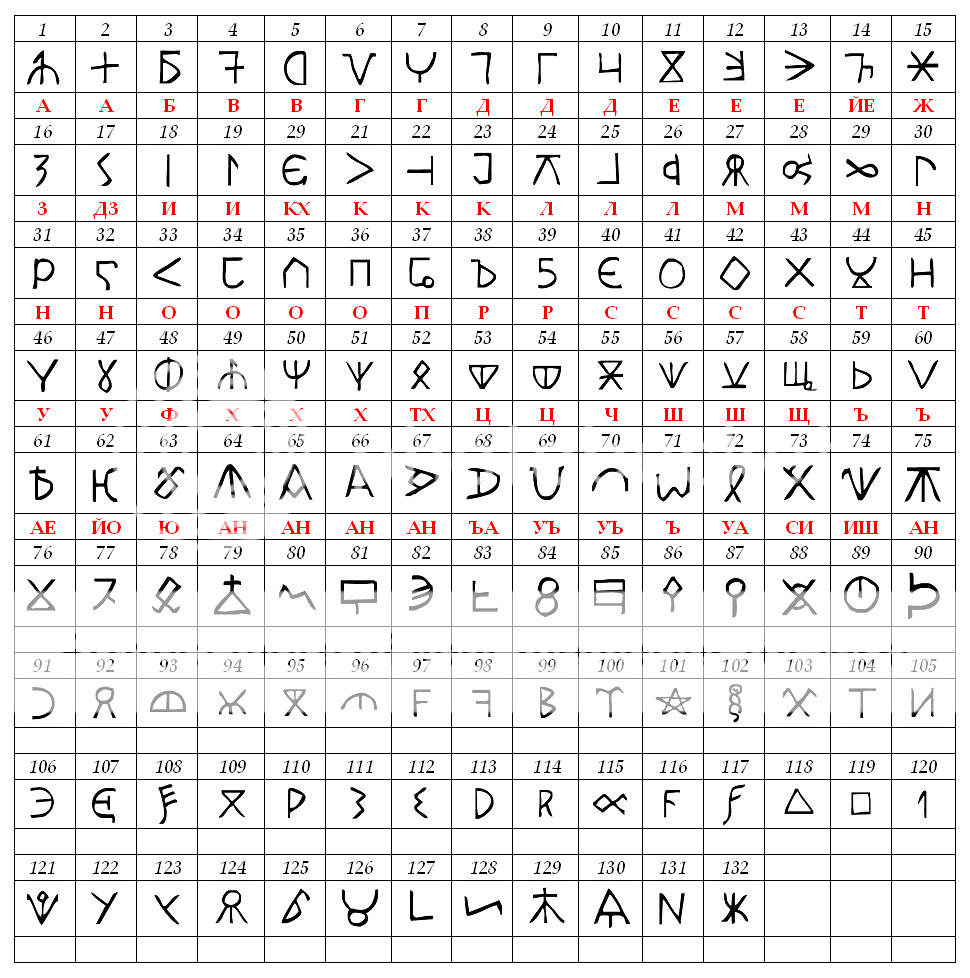
Thanks to the testimonies of the old writers we know a lot
about Thrace and the people of this country. They inhabited considerably large
area – the teritory of Modern Bulgaria, Rumania, Serbia, parts of Slovakia, Ukraine, Greece, European and Asian Turkey.
The best known
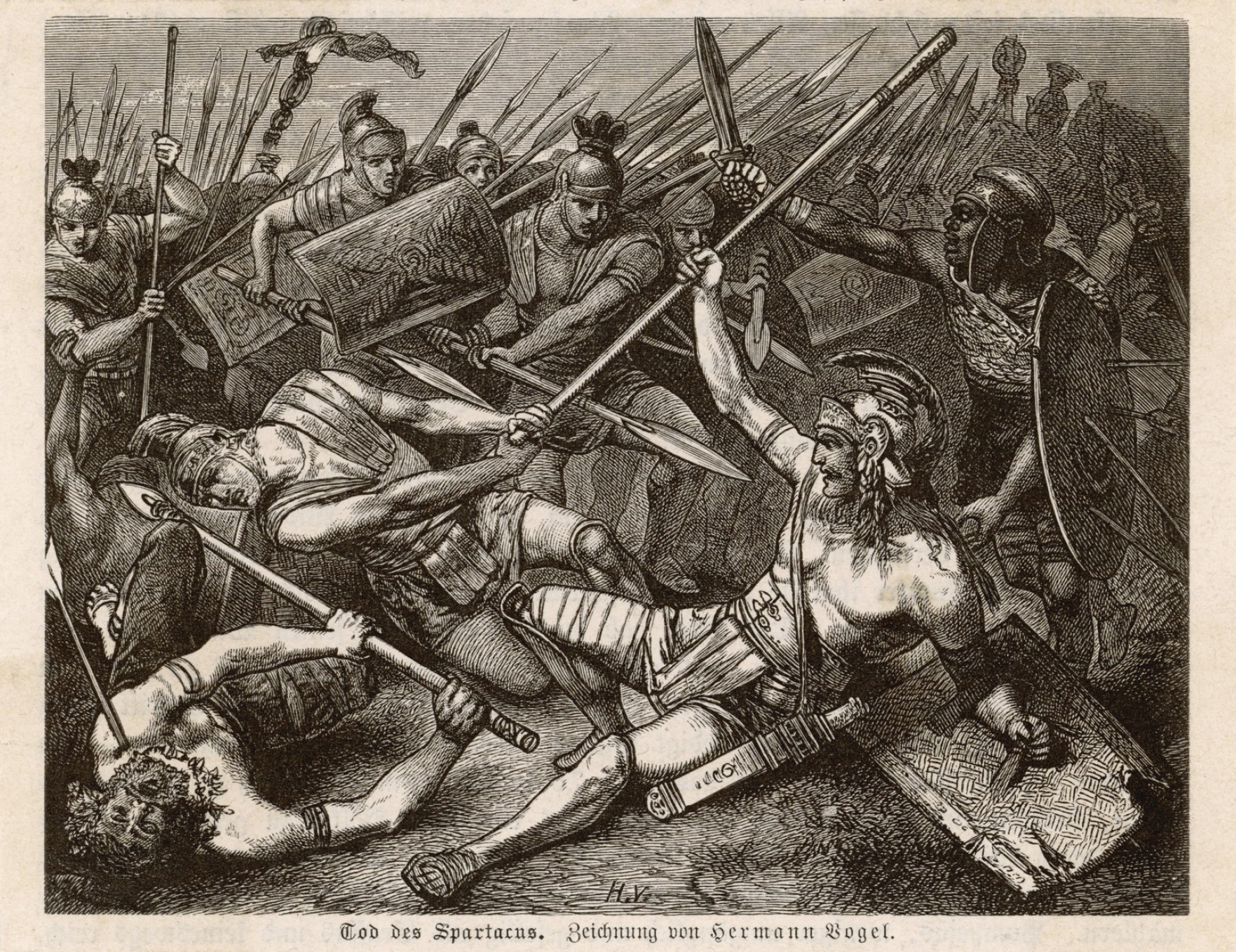
Thracians are Spartacus, who made Rome tremble with his uprisal of the slaves,
and Orpheus – the great musician and thinker. Not to forget the deified
priest Zalmoxis, which doctrine became famous among many people.
Thracе
was densely populated and its people began
to migrate from their Balkan homeland very early in the past. Strabo mentioned Thracian journey and
settling at the Northern coast of the Adriatic Sea after the Trojan war [1] XIII.III.25. Some Thracian tribes
as Sarapari became neigbours of the Medes (living in Iran) and Armenians – “ It
is also said that certain of the Thracians, those called "Saraparae," that is
"Decapitators," took up their abode beyond Armenia near the Gurani and Medes…” [1] XI.XIV.14.
In the time of Pliny The Elder, Thracian Sarapari have
reached even Bactria [2]. VI.xviii-48. Tribe with Thracian name Edoni is
localized in the vicinity of Parthians and Sacae, who
lived in Central Asia [3] VI.xviii- 50. Thracian Thuni and Ciconi (the last
known from Odyssey) are mentioned not far from India [3] VI.xx-55.
Apparently, certain Thracians not only came
near India, but also colonized some part of it. In his work “Anabasis Alexandri”
Lucius Arianus wrote that the Thracian Dionyssos was considered the founder of the Indian
civilization – “...But when Dionysus had come, and
become master of India, he founded cities, and gave laws for these cities...
Dionysus whoever he was came to India and gave the Indians seeds of
domesticated plants; then Dionysus first yoked oxen to the plough and made most
of the Indians agriculturists instead of wanderers, and armed them also with
the arms of warfare. Further, Dionysus taught them to reverence other gods, but
especially, of course, himself ”. [4] VIII.vii.

Except Asia,
Thracians visited many other places in the Antiquity. Irish chronicles claimed
that a group of foreign colonizers came to their land from Thrace [5] p.229.
Because of the fact that Thracian personal names are written on Cretan Linear A
documents and artefacts, we know about the Thracian presence in Minoan Crete [6]
p.18 (Porozhanov quoting P.van Soesbergen, cit. 10).
That substantial number of Thracians inhabited Northern Part of Black Sea coast we know from the reserch of S.Krykin. He noticed the presence of a large number of Thracian personal names in epigraphy (and historical sources) in this region [7] pp.58-83.
That substantial number of Thracians inhabited Northern Part of Black Sea coast we know from the reserch of S.Krykin. He noticed the presence of a large number of Thracian personal names in epigraphy (and historical sources) in this region [7] pp.58-83.
Fist mentioning of Thracian tribes and the land Thrace is
from 14 th ct BC. In Egyptian chronicle describing the Hittite-Egyptian war at
Cadesh, Thracian Dardanians, Mysians (Phrygians) are listed among the
Hittite alies [6] p.22. In Linear B document from Pylos is mentioned the
toponym Thrace – TE-RE-KE-WI-JA [6] p.20.
Later, during the Trojan War, Thracians became allies of the
Trojans, to whom they were related. Various Thracian tribes participated in
that ancient conflict. Mysians, Paeonians, Phrygians etc defended their kin in
the besieged city.
Thracians were present in other major events in the
Antiquity. Knowing the excellent qualities of the Thracian warriors, Alexander
the Great took many Agrianians, Paeonians and Odryssians in his army. They proved
to be worthy agaist the soldiers of the Persian king Darius.
If Thracians have colonized so many places, and participated
in so many events in different lands, it is no wonder, that these people have
been called by Herodotus the most numerous nation after Indians [8] V-3. In the middle of first
millennium BC Thracians created a mighty state. Thucydides testified about the
strenght and splendour of the Odryssian
kingdom (Odryssi were major Tracian tribe) – “For of
all the nations of Europe that lie between the Ionian Gulf and the Euxine Sea,
it was, for revenue of money and other wealth, the mightiest.” [9]. II.97.
In 1st ct AD Thrace sunk in political crisis. The Romans
used the chance and established their rule there in 44-45 AD [10] p. 229. In the next century
emperor Trajanus managed to conquere part of the Northern Thracians [10] p.
230. However, even after the Roman conquest, Thracian population did not
diminish seriously. Strabo testified that in 1st ct. AD Thracians could summon
an army of 200 000 foot
soldiers and 15 000 cavalry [11] VII. fr. 47(45). Even for modern standarts
that is formidable force.
About half a century later, Pliny mentioned that Thrace is
the mightiest in Europe [3] IV-xi-40. In 2nd ct AD Pausanias was also impressed
by the numerous Thracian nation [12] I.9.5.
In 4th ct AD the author of “Totus Orbis Descriptio” claimed that Thrace
is inexhaustible source of good soldiers [13] p. 62. That situation didn’t
change even in the 6th ct AD, when Roman Emperor Justinian The Great expressed
his admiration of the excellent qualities of the Thracians [13] p.62.
There
is no doubt that Thracians were respected by the Romans. Thracian people
received high functions in Roman Empire. In the time of Constantine The Great,
governor of Egypt and Lybia was Thracian man with name Rometalcas [13] p.54. The greatest general of the Late Antiquity –
Belisarius was Thracian too [14] III.xi-21. Aetius – the mighty advercary of
Attila was born in Durostorum and had Thracian father [15] p.241. Other high
military commanders of Thracian origin were Vitalianus [16] p.91, Terentius,
Zaidus, Rufinus, Marcian [14] III.xi-7-8.
Thracian were not only high military commanders in the
Roman Emprire, many become even Emperors. Maximinus Thrax was native of Thrace, who thanks to his suppernatural
power and valour has managed to reach the rank of general and later was
proclaimed emperor by his soldiers [17]. Other Roman emperors of Thracian
origin were Constantine
the Great, Justinus I, Constantius II, Julian,
Leo I, Leo II, Justinus I [18], Marcianus, Justinian I, Justin II, Tiberius, Phocas [19],
Galerius [20], Maximinus Daia [21], Licinius, [22], Caludius II Gothicus [23].
We see that Roman conquest not only did not diminished the
strenght of the Thracian people, but they even have become protectors and
bulders of the empire. Thanks to the policy ot Constantine The Great,
Christianity went out of persecution and became oficial religion. Other Roman
emperor of Thracian origin – Justinian The Great financed the creation of the
most magnificent buildings and fortifications.
Because of intense participation of the Thracians in the
life of the Roman Emprire, it was believed that at the end of Late Antiquity
Thracians had become romanized. It can not be denied that a large part of the
Thracians learned Latin in order to make a carrier.
However, the largest part of the Thracian people – the
peasants did not lose their old language and culture at least till 3rd ct AD [13] р.51-52. In 4th ct AD Thracians have translated the Bible into their own language [13]p.55. Even in the 6th ct AD Thracians still keep their names and hold on their language[13] pp. 57-64.
There is something else, which is often ovelooked by
different scientists. Not all the Thracians were subjects to the Roman Empire.
Many Thracians lived north of River Ister (Danube), near Carpatian Mountains and
Black Sea steppe. Strabo testified that
Getae and Mysians ocupied lands on both sides of Danube – “the Getae lived on
either side the Ister, as did also the Mysi, these also being Thracians and
identical with the people who are now called Moesi”. [11]
VII.III.2.
Part of Thracian Bessi were under
Roman rule, but other part lived in freedom. Ptolemy localized branch of Bessi
far north of Danube – “then the Saboci, then the Piengitae and the Biessi near the Carpathian Mountains”.
[24] III.5. Thracian Tyragetae
inhabited some area near River Dnester [3] IV.xii.82.
The free Thracians were menace for the Roman Empire. Often
they crossed river Danube and terrorized the Roman colonist in Thrace.
These so called invasions were nothing more than attempt for liberation.
Of cource Romans thought otherwise, they considered Thrace as their dominion, looked upon free Thracian as savage invaders and described them as such.
Of cource Romans thought otherwise, they considered Thrace as their dominion, looked upon free Thracian as savage invaders and described them as such.
In 7th ct AD the Greeks took the power in Constantinople –
the capital of the Eastern Roman Empire. Greeks have always been great enemies
of the Thracians, ploting against them and even organized the assasination of
their kings. Kotys I was killed by Python and Heraclides - two students of
Plato [27]. p.369.
From the deep antiquty there were bloody conflicts between
Greek and Thracians. Thucydides testified about an attemp of Athenians to steal
Thracian land. About 10 000 Greek colonists came along river Strymon and chased
away the local population. That was not enough and the Greeks persueded further
into foreign teritory. This time they did not have same luck and were destroyed
by united tribes of the Thracians [9] I-100.
When in 2nd ct BC Greeks were conquered by the Romans the
hostilities towards Thracians became impossible. However in 7ct AD the
situation was different. Greeks had obtained power and were ready to use it in
order to assimilate Thracians and take their land.
The free Thracians and these under Roman rule realized the danger and began to organize themselves. At the end of 7th ct AD two large groups of Thracians – Getae and Mysians merged and formed tremendous army, who vanqueshed the legions of the emperor Constantin Pogonatos and even forced him to pay tribute to the new liberated state.
The free Thracians and these under Roman rule realized the danger and began to organize themselves. At the end of 7th ct AD two large groups of Thracians – Getae and Mysians merged and formed tremendous army, who vanqueshed the legions of the emperor Constantin Pogonatos and even forced him to pay tribute to the new liberated state.
These united Getae and Mysians are known in the historical
sources as Old Slavs and Old Bulgarians…and that brings a lot of confusion,
because Slavs are considered as people, who lived far from Thrace, and about
Bulgarians was said that they were Asians.
The confusion exist because of the fanatic Greek propaganda and the fact that many historical sources and other proves are unknown to the broad public.
The confusion exist because of the fanatic Greek propaganda and the fact that many historical sources and other proves are unknown to the broad public.
Theophylact Simocatta explained few times that Slavs in
Danube region are not new people, but the progeny of Getae – “Sclavos sive Getas hoc enim nomine antiquitus
appellati sunt” [26] p. 14-15. Slavs was just an alternative name for the Getae, just like
Hellenes is an alternative name for the Greeks, and Germans is an alternative
name for the people, who call themselves Deutschen.
Because the language of the Getae, called Slavs was related
to those of ancestors of Polish, Czech, Slovenian etc. in later times these
people were also called Slavs. In the very same way was formed the name of the
Germans. Tacitus explained that initialy the name Germani was aplied to the
whole comunity, and just later was used for all the people, who were related to
each other – “The name Germany, on the other
hand, they say is modern and newly introduced, from the fact that the tribes
which first crossed the Rhine and drove out the Gauls, and are now called
Tungrians, were then called Germans. Thus what
was the name of a tribe, and not of a race, gradually prevailed, till all
called themselves by this self-invented name of Germans, which the
conquerors had first employed to inspire terror.” [27]
Old Bulgarians had also an alternative name – Mysians. In
the course of 1100 years Bulgarians were called Mysians and Bulgaria was
equated with Mysia. St. Hieronymus, L.Deacon, M.Ataliates, D.Homatian, J.
Tsetses, N. Gregoras, M.Gavalas, L. Halkondylos, J. Kantakuzin, N. Choniates
and others called repeatedly Bulgarians with the name Mysians.
Most of the scientists think that was a mistake of the old authors. Of
course many writers in the past were wrong about certain things, but it is very
unlikely that one and the same mistake would be repeated in the course of 1000
years.
And there is something else, which is overlooked by the most of the scientist. Old Bulgarian funeral rites, customs, weapons, homes and fortifications were as those of the Mysians and that is a prove that Bulgarians and Mysians are the same people.
And there is something else, which is overlooked by the most of the scientist. Old Bulgarian funeral rites, customs, weapons, homes and fortifications were as those of the Mysians and that is a prove that Bulgarians and Mysians are the same people.
The so called alliance between Old Slavs and Old Bulgarians
was in matter of fact alliance between two major Thracian tribes – Getae and
Mysians. That explains why the First Bulgarian Empire became so quickly a very
powerful state – related people mix without problem.
The claim that Old Bulgarians and Danubian Slavs were related is suppotred by two large anthropological researches. In both cases were examined more than 10 000 people and it was established that Bulgarian people are of European origin and have no relation with people of Central Asia [28], [29].
The claim that Old Bulgarians and Danubian Slavs were related is suppotred by two large anthropological researches. In both cases were examined more than 10 000 people and it was established that Bulgarian people are of European origin and have no relation with people of Central Asia [28], [29].
Few years ago Swiss genetic research showed that the most
of Bulgarian people are progeny of the Thracians [30]. A
bit later, genetic research was made by scientists from Bulgarian Academy of Sciences. The
result showed again that there is no tracé of Turko-Altaic genes in Bulgarian
population and that Bulgarians do have Thracian blood [31].
Even before the genetic and ahthropological reserches, many
scientist knew that Bulgarians are progeny of the Thracians. N.Y. Vladikin, C.
Ginchev, G. Cenov, G.Sotirov and other presented many proves about Thracian
origin of the Bulgarian people.
Unfortunately the works of these people did not receive the needed attention. There was also censorship during the totalitarian period 1944-1989. It was forbiden to promote any material, which could generate national pride.
Unfortunately the works of these people did not receive the needed attention. There was also censorship during the totalitarian period 1944-1989. It was forbiden to promote any material, which could generate national pride.
Only in resent times researchers as prof. A. Chilingirov
[32], A. Kiryakov [33], Ch. Bonev [34] and others were able to present to the
Bulgarians public their discovery about the Thracian roots of the Bulgarian
people.
Hopefully further studies will be made and also translated into English, German, French, Spanish, so that the truth finaly reaches everyone.
Hopefully further studies will be made and also translated into English, German, French, Spanish, so that the truth finaly reaches everyone.
Sources:
1.Strabo, Geography, book XIII,
trasl. H.L.Jones, Loeb Classical Library, Harvard University Press, London,
1928;
2.Strabo, Geography, book XI,
trasl. H.L.Jones, Loeb Classical Library, Harvard University Press, London,
1928;
3.Pliny, Natural History, books
3-5, trasl. H.Rackham, Loeb Classical Library, Harvard University Press,
London, 1999;
4.Arrian, Anabasis Alexndri,
transl. E.I.Robson, Harvard University Press, Cambridge, Mass. 1933
5.Encyclopaedia Britannica,
Dictionary of Arts, Sciences, and General Literature, 9th ed. Vol.V, Henry G.
Allen and Co, London, 1833;
6.K.Porozhanov, Obshetsvo i
Darzhavnost u Trakite – sredata na II- nachaloto na I hil. pr. Hr.( v kontesta
na paleobalkanozapadnomaloaziyskata obshtnost), Studia Thracica 6, Academia
Literarum Bulgariaca, Institutum Thracologicum, Sofia, 1988;
7.С.Крыкин, ФРАКИЙСКИЙ СУБСТРАТ В АНТИЧНЫХ КОЛОНИЯХ СЕВЕРНОГО ПРИЧЕРНОМОРЬЯ, THRACIA 8, Аcademia Litterarum Bulgarica, Serdicae, 1988, с.58-83;
8.Herodotus,
Histories, transl.G.Rawlingson, Wodworths Classics of World Literature,
Herfordshire, 1996;
9. Thucydides, The Peloponesian
War, Penguin Books Ltd, Harmondsworth, 1972;
10.Al.Fol, K.Jordanov,
K.Porozhanov, V.Fol, Ancient Thrace, International Foundation Europa Antiqua,
Institute of Thracology – Bulgarian Academy of Sciences, Sofia, 2000;
11.Strabo, books 5-7, transl.
H.L.Jones, Loeb Classical Library, Harvard University Press, London, 1995;
12.Pausanias, Description of
Greece, Book I, Attica, Ancient History Sourcebook,
13.В.Бешевлиев, Проучвания върху личните
имена у траките, БАН, София, 1965;
14. Procopius, History of the
Wars, transl. H.B. Dewing, Loeb Classical Library, Harvard University Press,
London, 2000;
15.J.B.Bury, History of the Later
Roman Empire, Macmillan & Co, London, 1923;
17.Historia Augusta, The two
Maximini, Loeb Classical Library, 1929;
18.G.Sotirov, Ubiistvoto na
Justinianovata Samolichnost, Linn, Toronto, 1974;
19.N.Miteva SOME ETHNOCULTURAL PROBLEMS IN THE
EVIDENCE OF THE AUTHORS DURING THE LATE ANTIQUITY ABOUT THE THRACIAN LANDS,
THRACIA 8, Аcademia Litterarum
Bulgarica, Serdicae, 1988;
20. Galerius, Encyclopaedia
Britanica http://www.britannica.com/EBchecked/topic/223951/Galerius
21. N.S.Gill, Maximinus Daia http://ancienthistory.about.com/od/emperors/ig/Roman-Emperors/Maximinus-Daia.htm
23.
Encyclopaedia Britanica, Claudius II Gothicus http://www.britannica.com/EBchecked/topic/120521/Claudius-II-Gothicus
24.Ptolemy, Geography, book III, Publisjed by the New York
Public Library, 1932;
25.Philostratus, The Life of Apollonius of Tyana, transl.Rev.E.Berick,
J.M’Creery, Black-Horse-Court, London, 1809;
26.G.Cenov, Praotechestvoto i Praezikut
na Bulgarite, Heliopol, Sofia, 2005;
27. Medival Sourcebook, Tacitus,
Germania, http://www.fordham.edu/halsall/source/tacitus1.html
28.М. Поповъ, Българският
народъ между европейските раси и народи, Придворна Печатница, София, 1938;
29.М.Попов, Антропология
на българския народ, том -I , Физически облик на българите, БАН, София, 1959;
30. Българите взели най-много гени от траките, Труд,
27-05-2009
31.Учените
представиха доказателства, че сме славяни, но не съвсем, Блиц, 08-08-2011; http://www.blitz.bg/news/article/117690
32.А.Чилингиров,
Гети и Готи, Изследвания II, Ziezi ex quo Vulgares, София, 2009;
33.А.Киряков,
Произход на древните българи, Българско общество за мултимедийно изкуство,
София, 2006;
34.Ч.Бонев,
Праславянските племена, Институт по Балканистика при Българската Академия на
Науките, София, 2007;


 Публикации